Showing posts with label Books. Show all posts

Wednesday

Miracle At St. Anna by James McBride

Ever get so caught up in someone else's story that you are there? You feel yourself a participant or bystander in the action. Your heart races when danger is imminent and you're awash with relief when the group reaches relative safety. James McBride's Miracle at St. Anna does just that. Descriptions of war and beauty and human suffering that can only be experienced in one's innermost parts reverberate in the mountains and foothills of the Italian landscape. The dramatic, descriptive prose manages to maintain an element of suspense that keeps the reader/partaker feeling as though the novel is perpetually leading up to something (in a good way). The Buffalo Soldiers, like McBride's proud uncle who inspired the book, aren't simply characters, they are undeniably human with flesh that wounds and bleeds red blood, hearts that pound with joy in pleasant moments and sorrow at loss, and minds that are forced by circumstance to grapple with unholy realities. Read Miracle at St. Anna and experience an oft-ignored part of the Good War.


P.S. – Then watch Spike Lee directed movie adaptation released in 2008 with the tagline - World War II has its heroes and its miracles.

Sunday

What Dr. Spock Didn't Tell Us by B.M. Atkinson

What Dr. Spock Didn't Tell Us or A Survival Kit for Parents by B.M. Atkinson, Jr. is an entertaining list of afflictions parents and their children acquire quite naturally in the course of living. The book, replete with illustrations (by Whitney Darrow, Jr.) of the bedevilments parents can at best mentally prepare for, succinctly describes these ailments; most are a paragraph long but a few of the more complicated dis-eases take a page to fully explain. Soon-to-be parents, nervous Nellies that they sometimes are, may miss a few hours of sleep over the adroitly named memories most veterans will laugh and cry about. If any of this bedlam is in the traditional parenting books, it surely isn’t presented in such a seriously funny manner. Parents, sit down and enjoy What Dr. Spock Didn't Tell Us, you'll need all the help (and rest and laughter) you can get. If nothing else convinces you, consider the author’s explanation and the remainder of the book’s title: An encyclopedic guide to hitherto uncatalogued afflictions, aberrations, exotic diseases of the American Child. Told ya.

Thursday

Bird by Bird by Anne Lamott

Bird by Bird is a collected reflection on the writing process. Author Anne Lamott begins with a vignette on the origin of the writer within, then discusses writing styles while adeptly weaving in examples, writing in different instances as a child, for a child, and as an adult reflecting on childhood so her students, er, readers experience the affects of character and narrator on a story. One can appreciate the candor with which the author reveals the realities of a writer's life (although it seems more specific, perhaps a middle-class, sufficiently connected writer's life): the bumps, trips, jealousy, depressions and near breakthroughs and almost made its and little acclaim for all that effort. Though the book attempts to defy categorization, this writer has labeled it a narrative lesson plan for a writer’s workshop with real life illustrations. Lamott may be a sweet but determined gangsta issuing a thinly veiled warning to aspiring writers that this is tough work and her turf or she may be a writer with a deadline and a drawer full of notes (on writing?) jotted on index cards that, with her insistence, arranged themselves into this book.

Wednesday

True Notebooks by Mark Salzman

True Notebooks is the story of high-risk offenders in LA’s Central Juvenile Hall exposing their vulnerable selves in a writing class. This one opportunity to share their thoughts literally gives the few who attend room to breathe and a window to the sky instead of a tenebrous 10 by 12 cell abutting a brick wall. For their efforts, the prisoners unearth pain and fear and find joy and understanding. Salzman pens the sojourn without pity, emitting the raw energy of these prisoners, showing through his eyes and their voices that they are like so many teenagers we know…they think about girls incessantly, they clown around, they make mistakes, they have yet to discover their true selves. The author moves through scenes with dexterity as he shares his journey­ in a world not his own while contextualizing the stories of his students for whom life is a sentence not an abstraction and endings are rarely happy. Read True Notebooks and remember that life is less black and white but so many shades in between.

Plum Bun by Jessie Redmon Fauset

Plum Bun by Jessie Redmon Fauset is a fairy-tale-like story told in the context of the complex realities of early to mid 20th century America. Set in Philadelphia and New York City, this novel is crafted with such subtlety that the casual reader may miss the depth of knowledge and life that brims below the daintily espoused language. Although she approaches despotism at some points, the author, in the voice of the omniscient narrator, builds trust with adeptly evinced setting and insight and, at times, just as deftly misleads the reader. Minor roles are made vital when Fauset presents them with all their flaws and ornament. The word “propinquity,” employed several (or one too many) times, serves as a metaphor for the protagonist and for the novel: while close in proximity and forthright in words and deeds, both are obscured as their deeper selves remain veiled to the inattentive eye. This coming of age novel takes the structure of a nursery rhyme and fills it with the stuff of life—hope, disappointment, irony, wisdom—and reminds us that each moment of the journey is a worthwhile one.

To Market, To Market,
To Buy a Plum Bun;

Home again, Home again,

Market is done.

The Social Meaning of Language by JB Pride

The Social Meaning of Language brings together the sibling sciences—psychology, sociology, anthropology, and all their compound and hyphenated forms—to discuss linguistics as a social science or, as it is now commonly known but was still emerging as at the time of its publication in 1971, sociolinguistics. (Yes, I know. Really.) This book collects and argues the ideas of the –ologists, men today’s students might google on their smart phones just before class. It examines how and why our speech functions range from unconscious to deliberate choices as we attempt to communicate with others who interpret our coded messages as intended and sometimes in unexpected ways. This surprisingly mod little book of complex ideas is valuable as a reminder that many textbook “facts” are not so much facts as accepted notions. Ideas like multi-dialectal speakers and second language acquisition theory—current terms in the field—are postulated and countered by the originators of the conceptions and their contemporaries. Such in-depth discussion will be especially appreciated by the student seriously studying the stuff of language and the social science enthusiast (if there is such a thing). Engage your left temporal lobe and peruse The Social Meaning of Language.

Thursday

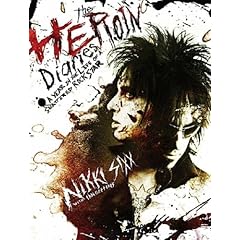
The Heroin Diaries by Nikki Sixx

The old saying has always been “sex, drugs and rock ‘n roll” and few in the musical genre’s long history have lived those words quite like Nikki Sixx. The Heroin Diaries covers a year in the life of the Motley Crue bassist / songwriter when he was addicted to heroin while writing for the band, recording an album and doing multiple tours. It’s told both through the actual diaries Sixx kept during that time and side commentary from the people that were closest to him while all of this was going on. At times the reality of Sixx’s life is startling, especially the amount of drugs he used and what he ended up doing while he was on those drugs, while at other times you may find yourself laughing at his dark humor. A quick read despite its length, The Heroin Diaries provides an insight into a world most of us will hopefully never see. It also illustrates the fact that even though many addicts aren’t happy being addicted they are the only ones that can truly help themselves. It’s amazing Sixx lived to tell this story.

Friday

Tyrell by Coe Booth

Tyrell is realistic fiction for many an urban teen coming of age in or around poverty and a nightmarish fantasy in the seedy part of the city for suburban and rural dwellers. At times, the narrator’s slang distracts from the rhythm of the prose but such staccato may keep the interest of the adolescent who loathes reading 310 pages of anything. Images of poverty are fresh; the emotional undulations the title character experiences and shares lend authenticity and, along with ubiquitous sexual pressures and illegal activity, make this tale of stolen youth a page turner. With nearly every female in the novel characterized as irresponsible or a sexual deviant, I almost assumed Coe Booth a member of the generally hairier gender but I suppose that the notion of a near-perfect protagonist and narrator would make many a male novelist chuckle then pause. Still, you gotta love Tyrell’s fear and courage, naivety and wisdom all balled up into one hormone heightened kid who can’t catch a break but never stops trying.

The Kite Runner by Khaled Hosseini

Not since childhood have I been so consumed by a work of literature. I initiated contact by opening the book; then the words leapt from the page and transported me across the world to an unknown land. My senses were overloaded with the realities of this place too distant to be real, too startling to be imaginary, replete with ripe fruit bubbling summer joys, cloudless and colorful winter skies, fallen Adams on cold autumn ground…I felt every character’s conflicting emotions like so many of my own, loving and loathing parts of myself in a boy--then man--I heard about but never met. I moved through the pages according to their rhythm, the prose at once fresh and soothing, fierce and subjugating. As the journey neared its end, some loose ones were tied in such perfect bows they disrupted the natural meter I had come to know. But in life I’ve learned to accept even the expected unexpected. In all, The Kite Runner is a 324 page sojourn through heaven, hell, and all the shared space in between that is worth every minute it takes to read it “a thousand times over.”

Tuesday

The Known World by Edward P. Jones

Slavery. The American South. Life. Chains. Color Lines. Toil. Love. Sweat. Confusion. Legacy. Tears. Loss. Freedom. A litany of characters- black, white, and Indian, bound and free- living in the antebellum south. Owning, stealing, buying, maiming, loving, killing, but never freeing slaves. Only a great mind could conjure up so many lifetimes and eloquently reveal them in the disjointed way one remembers their own past, intertwined in the lives of those around them, with a non-intrusive narrator who reports what he knows and sees without judgment. This tale of the true South captured my attention, stole my emotions, and released my spirit only after I digested every word. Know what you never knew. Read The Known World by Edward P. Jones.

Thursday

Do You! by Russell Simmons

If anyone is fit to write about entrepreneurial success it’s Russell Simmons. Do You!, however, is not a specific outline of how he built his numerous companies, rather it’s more a set of concepts that one can use in business, or everyday life, to better themselves. I have to admit, after reading the book I was inspired to start work on a project I had been putting off for years and it felt good. Simmons will be the first to acknowledge there’s nothing new in this book, what Do You! has are essentially common sense realities about life that we should all know, but sometimes forget to harness. After reading through it your first thought will probably be “I knew all that, so how come I’m not doing all of it?” My lone gripe with Do You! is that Simmons goes a bit overboard with his love of yoga, something that I think could have been put more in the background. In fact, you might want to just skim that chapter, but make no mistake, read through the rest and you will, much like me, be inspired to do even more in life.

Tuesday

Wild Stars Seeking Midnight Suns

One can’t help but to love J. California Cooper and her heavy-handed narrator self in her latest offering of short stories, Wild Stars Seeking Midnight Suns (2006), told the way your tough but sweet, God-fearin’ auntie would: sometimes graceful, sometimes verbose, often preachy, forever feigning ignorance, but wisdom-wise in true southern doublespeak. Although different ages and circumstances were identified, attempts to give the narrator of each story a separate personality were futile; one could imagine aunties’ shawl-draped shoulders embracing the southern breeze as she recounted her tales. The one perceptible departure was an odd, rambling narrator whose message nearly fell through the holes in her childhood recollection. The vibrant characters adorned with telling names offer pre-encounter insight into their lives like sisters Willa and Futila Ways and politician Mr. Bsurd. The tales presented in Wild Stars Seeking Midnight Suns hold all the jealousy, misery, adultery, covetry? and every breakable admonition in the Old and New Testaments one can handle where characters reap what they sow, for better or worse. Give it to a churchified loved one and they’ll smile for days. But be careful or you’ll find yourself their next victim, er witnessee.

Friday

The 100th Human by Chris Fenwick

Want to help yourself but avoid the hollowness of the typical self-help book? Turn off your internal editor, let go a little, and you’ll soon find yourself enjoying Chris Fenwick’s “The 100th Human.” The novel takes its title and premise on the scientific study and questioned phenomenon of the 100th Monkey effect, which determines that once a critical mass of awareness is reached, knowledge will spread mentally to all others. Despite its occasional weak phrasing and obvious monologues on positive thinking, it was a worthwhile pursuit. The author deftly controls the speed of the book, placing readers in the thick of the characters’ physical and spiritual quest for truth as they encounter impending danger. Buy it from Amazon and visit the author’s website for access to some freebies that will help you to continue to seek heightened awareness. “The 100th Human” novel puts your toe in the self-help sea, but it’s up to you to step in.

Tuesday

Alraune

There are many different adaptations to the Alraune story of a ravenous woman. My favorite, hands down, comes from Eros Comix. The brief series follows Dinah, a gorgeous black woman that becomes cursed with an insatiable appetite for sex. Dinah must figure out how this curse was placed on her and whether or not she really wants to be freed of it.

I think the fact that I don’t usually stumble upon black adult comics very often is why this stands out for me. What a sexy, smart, and flat out FUN series. If you happen across any of the issues, allow for some ‘alone time’.

Sunday

The Measure Of A Man by Sidney Poitier

‘The Measure Of A Man’ isn’t a self absorbed autobiography of an individual that’s accomplished much and chooses to assault us with his greatness. Sidney Poitier of course, is well aware of his contributions to the art of film, playing in a number of pieces with controversial topics that were far more then simply influential on life beyond the silver screen. Indeed, he’s modest to an extent. The most endearing segments of his story are the ones told about his early life as a child on ‘Cat Island’ in the Bahamas. A consistent theme in the book is how his training for survival as a youth on the island was revisited during various moments of significance throughout his seventy plus years. In my opinion the most important concept discussed is one of self analysis that ties directly into self responsibility along with the importance of family. Sidney Poitier covers so much to be considered in this ‘spiritual autobiography’. A great read written by an equally great man.

Friday

The Losers’ Club by Richard Perez

The Losers’ Club takes place in 1990’s NYC, the East Village to be exact, and is the tale of Martin Sierra, a down on his luck writer who has a day job he’s not very fond of and a love life that borders on the non-existent. Martin has been trying his hand at the personals and although the responses are few and far between he has made some friends and gone on some dates because of his ad. The Losers’ Club chronicles those evenings out with his personal ad dates and his life as a struggling writer in NYC looking for not necessarily love, but simply someone he can connect with. Easy to read and thought provoking, The Losers’ Club keeps you rooting for Martin Sierra, all the while giving quite a bit of insight into the life of a creative person. The complete restored edition also features an interview with the author.

Wednesday

Breath, Eyes, Memory by Edwidge Danticat

In the simplest of terms, ‘Breath, Eyes, Memory’ is a coming of age story. Sophie, born in a poor rural section of Haiti, is raised by her grandmother and Aunt. Her mother lives in New York, trying to make a better life for herself and her family by sending money back home. Sophie is 12 when her mother summons her to New York.

I can’t begin to imagine what it must be like to leave everything you are familiar with and be expected to slip right in to a new culture (that should but won’t accept you). This was not an easy read. While most coming of age story focus on one life changing event, this story tackles the issues of culture change, rape, mental health, and trying to assimilate while holding on to tradition. What made me love this book is the fact that Edwidge didn’t shy away from any of the taboo subjects. Sophie had to endure the humiliation of being ‘tested’ every month. A process where her mother inserts a finger in her vaginal opening to make sure she is still a virgin. Sophie’s mother is jealous that her daughter has not suffered as she has and attempts to thwart any happiness Sophie comes across. This book is raw and real, it ain’t no fairy tale.......so don’t bother looking for the happy ending.

Tuesday

Other People’s Property by Jason Tanz

There have been a lot of books written about Hip-Hop but Jason Tanz’s Other People’s Property: A Shadow History of Hip-Hop in White America, takes on the subject from a completely new angle, namely how whites have been influenced by Hip-Hop and how Hip-Hop has been influenced by whites. Tanz starts this task by drawing on his own experiences to investigate the complete white impact, what it means, and how it’s created a litany of subgenres in the culture. Other People’s Property includes a number of diverse stories, including one of a breakdancer who rides the train into a Connecticut suburb to teach kids both how to break and the history of breaking, a chapter that revolves around radio and rap music being delivered to the masses in Wisconsin, and a look at the emergence of white suburban gangsters. The writing style of Other People’s Property is very fluid and easy to read. Tanz interjects a good amount of humor where appropriate, as well, for instance when he writes of one rapper in particular he says “you would have heard him recount his many sexual exploits, including the fact that – and I’m sorry to be the one to have to tell you this – he has had sex with your mother.” This book is for everyone in Hip-Hop, especially those who are worried that what happened to jazz will happen to Hip-Hop. Other People’s Property tackles all the issues and helps complete Hip-Hop’s current story, making it a must read.

Monday

Hip-Hop Japan by Ian Condry

Ian Condry did a painstaking amount of research for Hip-Hop Japan, which covers a lot of bases and covers them well. One of the most interesting debates in the book involves the concept of keeping it real. Since we’re in America we have our American version of it, but in Japan they have groups with two differing opinions on the subject, one feeling keeping it real means keeping it American Hip-Hop and staying true to its roots, while the other feels keeping it real refers to the idea of keeping it Japanese and true to one’s own essence. Another interesting item in Hip-Hop Japan is that MCs are taking on the Japanese government which has adjusted history books in an attempt to create a more patriotic country. Hip-Hop Japan also covers the typical battles between commercial and underground, going pop and staying Hip-Hop, and the added struggle for female artists to try to get on. The lone issue I had with the book is that the language used in it doesn’t make for easy reading. You really have to concentrate as the author uses, in my opinion, far too many SAT words and not enough universal language, which is ironic since the entire idea of the book involves globalization. That being said, for anyone interested in how Hip-Hop arrived, spread, and is currently treated, in Japan this is a very informative read.